What is Boarding?
Hospital boarding in the emergency department (ED) is the practice of keeping admitted patients physically in the emergency department after a decision that admission is warranted.
Hospital boarding is a national problem that has worsened after COVID and was highlighted in a letter to the president signed by 34 medical societies in 2022. Hospital boarding in the emergency department is a major cause of emergency department crowding, and has myriad adverse consequences.
While hospital boarding can be defined to occur essentially as soon as a patient is admitted to the hospital and remains physically in the ED, based on international consensus an unacceptable “boarding threshold” has been defined as remaining in the ED for 4 hours or more after admission. “Boarding” as a percentage of all admitted patients is generally reported here, meaning the percentage of admitted patients who remain in the ED more than 4 hours after admission.
There may be times where boarding is a necessity due to unusual strain on resources or staff. However, when it becomes an endemic practice (as it has in recent years) it is corrosive and dangerous.
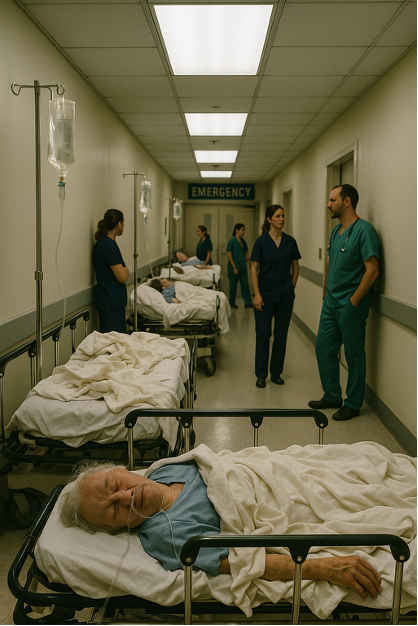
Boarding is:
- Harmful and even deadly to patients, especially the elderly
- Corrosive to staff morale, leading to understaffing
- Preventable
- Economically driven and in need of reform
- Condemned by more than 30 medical societies
- The major cause of ER overcrowding